Map data in Snowflake. Build where the work happens.
Tribal reads your Snowflake Horizon Catalog, your semantic views, lineage, tags, and policies, to learn what your data means. Then it builds and maintains the apps, workflows, and agents that act on that data inside your Enterprise Platform, the systems where your business actually runs. Catalog only. Tribal reads metadata and semantics, never your rows. Nothing is copied, nothing leaves.
Wherever your data meaning lives: Horizon Catalog, semantic views, lineage, row access and masking policies, Secure Data Sharing, joined to Salesforce, ServiceNow, and your other systems of record.


Know what your data means. Ship what your business needs.


that drive the business
in the warehouse
both systems already enforce



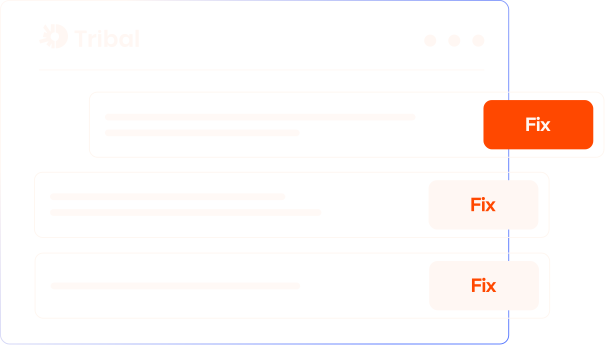
Read the Horizon Catalog
Tribal reads the Horizon Catalog: tables, views, semantic views, lineage, tags, masking and row access policies. Where semantic views exist, Tribal adopts them as the definition of record. Where they don't, Tribal enriches meaning from schema, lineage, and usage, and gives the business something to sign off on.
Join both worlds. Build in the platform.
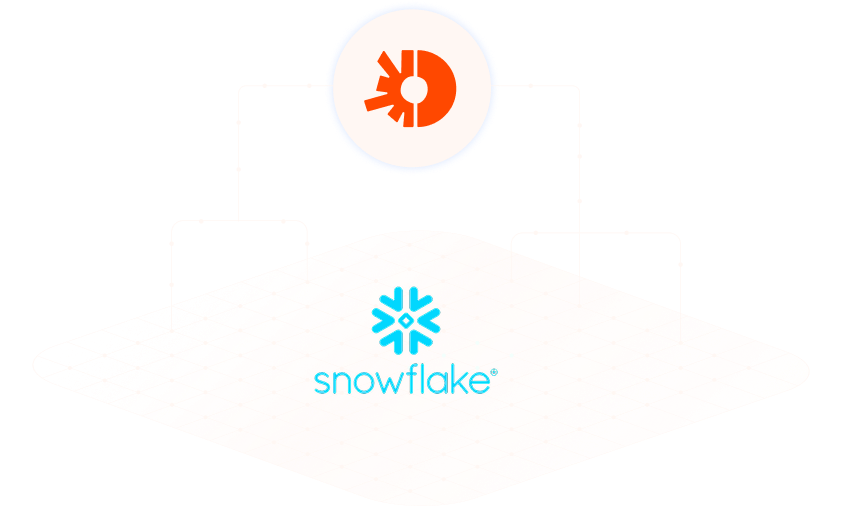
The Tribal Metadata Fabric joins Snowflake's Horizon Catalog to the system-of-record graph it already maintains. The same Fabric that maps your Salesforce org, including the undocumented and the half-broken parts, now carries the warehouse's meaning alongside the org's mechanics. Then Tribal generates the app or agent inside your Enterprise Platform: grounded in what the warehouse says, constrained by what the org allows, permissioned by what both systems already enforce.
Fix, build, and maintain
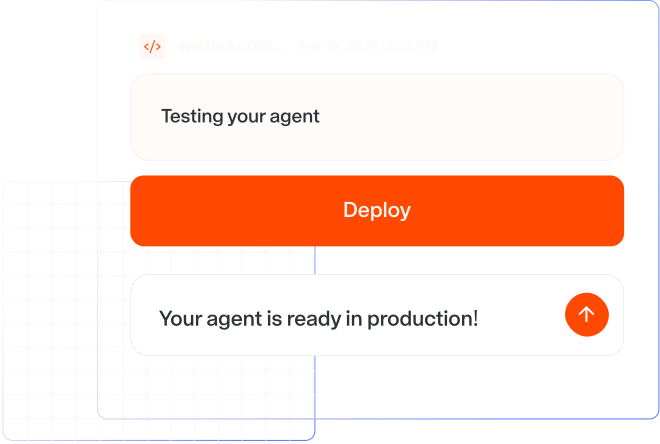
A schema change upstream is a silent break downstream. Tribal hears it. Because the Fabric holds the lineage from warehouse to enterprise system, Tribal re-evaluates every dependent app, agent, and workflow when the shape or meaning of the data moves: a column renamed, a semantic view redefined, a masking policy tightened, a share revoked. You see the blast radius, the risk, and the fix, months after launch, not just at launch.